



The Hard Water Nightmare: How to Safely Remove Baked-On Sprinkler Spots Without Ruining Your Clear Coat
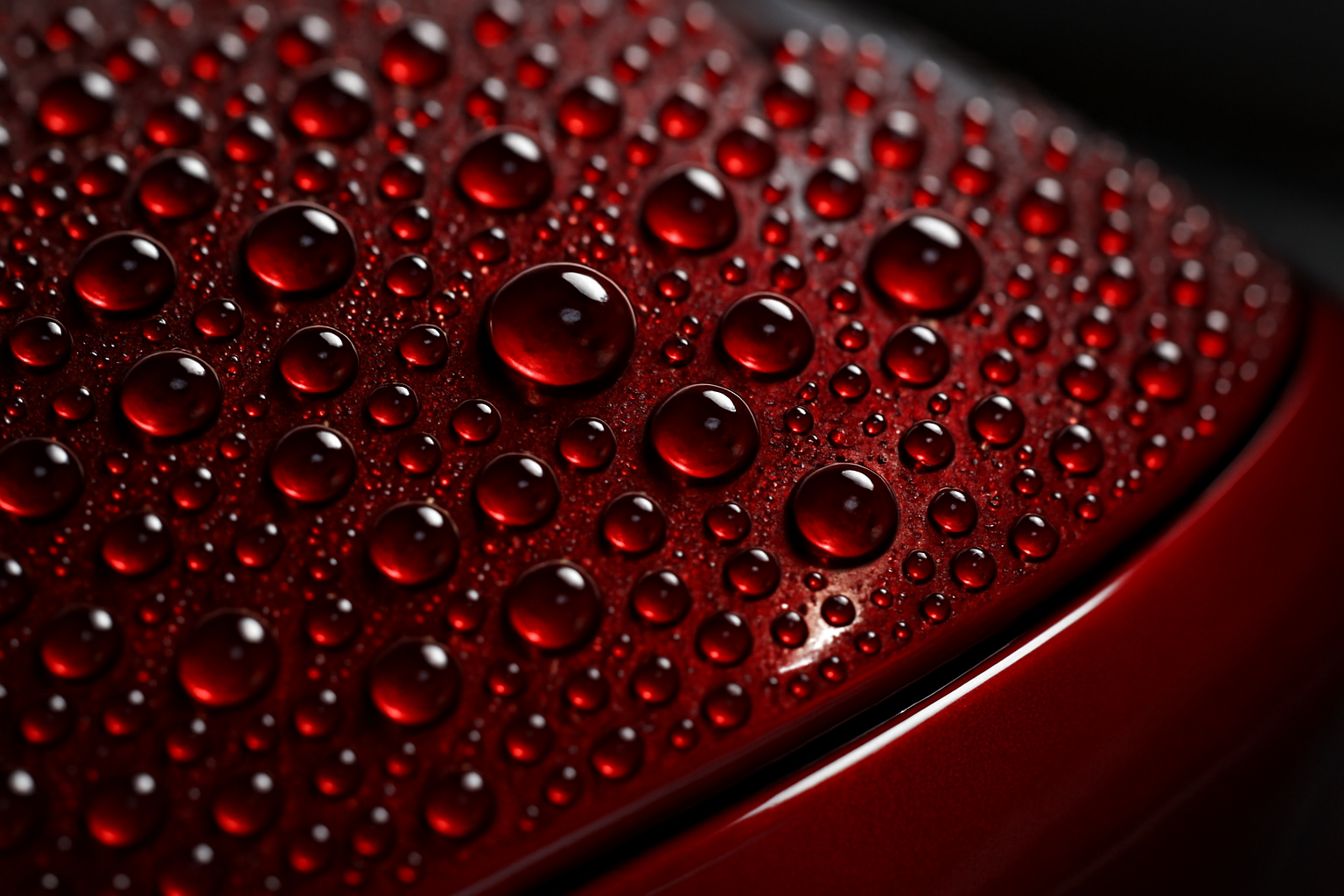
You park your luxury SUV perfectly in the shade at your office in Sugar Land or a shopping center in Katy. When you return, the wind has blown the nearby landscaping sprinkler directly onto your hood and passenger doors. In the 95-degree Houston heat, that water has already evaporated, leaving behind hundreds of chalky, white rings. Your immediate instinct might be to grab a microfiber towel and vigorously rub them off. Stop. Scrubbing those spots is the fastest way to permanently ruin your clear coat.
At Major Detailz, we provide the Hard Water Rescue Protocol. Houston’s municipal water is heavily concentrated with calcium, magnesium, and other alkaline minerals. When the water evaporates, those jagged mineral crystals are left behind. Here is the science of what those minerals are actually doing to your paint, and how we safely remove them.

1. The Anatomy of a Water Spot
Not all water spots are created equal. Depending on how long they have been baking in the sun, hard water deposits cause varying degrees of damage. In the detailing industry, we categorize these into three distinct stages:
| Spot Type | Damage Level | The Major Detailz Solution |
|---|---|---|
| Type I (Surface) | Minerals are sitting flat on top of the clear coat. The paint feels gritty, but the clear coat is still intact. | Acidic chemical descaling and a touchless wash. |
| Type II (Etched) | Minerals have begun to eat into the clear coat, creating a microscopic crater. The white ring remains even after a wash. | Chemical descaling followed by light machine polishing to level the clear coat. |
| Type III (Deep Etching) | Severe, prolonged exposure. The minerals have fractured the clear coat down to the base color. | Heavy multi-stage compounding or wet-sanding (in extreme cases). |

2. The DIY Disaster: Why You Shouldn't Scrub
Those white rings are essentially microscopic rocks. If you take a wash mitt or a quick-detail spray and aggressively rub the spots, you are dragging those calcium rocks across your soft clear coat, creating deep swirl marks. Furthermore, standard pH-neutral car wash soaps cannot dissolve inorganic minerals. They will simply clean the dirt around the spot, leaving the hardened calcium ring perfectly intact.

3. Chemical Descaling: Fighting Chemistry with Chemistry
To safely remove Type I and Type II spots, we must use chemistry, not elbow grease. We utilize specialized, low-pH (acidic) mineral descalers. When applied to the affected panels, this dedicated acid reacts with the alkaline calcium and magnesium, dissolving the mineral bonds liquefying the crust. This allows us to simply rinse the minerals away with zero friction, completely saving your clear coat from abrasive damage.

4. The Ceramic Shield Defense
If you regularly park near sprinklers, wax will not save you. Carnauba wax melts in the Houston sun and offers zero chemical resistance against hard water. To stop Type II etching from happening, we highly recommend a Ceramic Coating. A true SiO2 coating creates a hardened, chemical-resistant barrier over your paint. While water spots can still form on top of a coating, the ceramic layer prevents the minerals from etching into your actual clear coat, making them infinitely easier and safer to remove during a maintenance wash.

Don't Let the Sprinklers Win
Time is of the essence when dealing with hard water. The longer it bakes, the deeper it etches. Major Detailz brings a mobile chemical decontamination lab directly to your driveway or office in Katy, Sugar Land, or Houston. We neutralize the minerals before they can cause permanent damage.
Contact Major Detailz today to schedule a Hard Water Descaling and Ceramic Coating consultation.


