

The Chemical Truth: Ceramic vs. Graphene vs. Wax – Which Protection Does Your Vehicle Actually Need?
Walk down the automotive aisle of any store in The Woodlands, and you are bombarded with buzzwords: "Nano," "Graphene," "SiO2," and "Carnauba." For the luxury car owner in the Energy Corridor, discerning between marketing hype and chemical reality is nearly impossible. Does your daily driver need a Graphene coating? Is old-school wax still relevant in the Houston heat? Choosing the wrong protection isn't just a waste of money—it can leave your vehicle exposed to UV failure.
At Major Detailz, we view paint protection through the lens of Material Science. We don't sell bottles; we prescribe solutions based on how you drive. Here is the technical breakdown of the three major protection tiers.

1. Carnauba Wax: The "Organic" Choice (and Why It Fails in Houston)
Carnauba wax is the "classic" choice. Derived from palm leaves, it offers a warm, deep glow that is beloved by show-car enthusiasts. However, structurally, it is a fat. In Houston, where surface temperatures on a black car can exceed 160°F, natural waxes literally melt and evaporate within weeks. While we use boutique waxes for Concours Prep, we rarely recommend them for a daily driver in The Energy Corridor. They simply cannot survive the thermal load.

2. Ceramic Coatings (SiO2): The "Glass" Standard
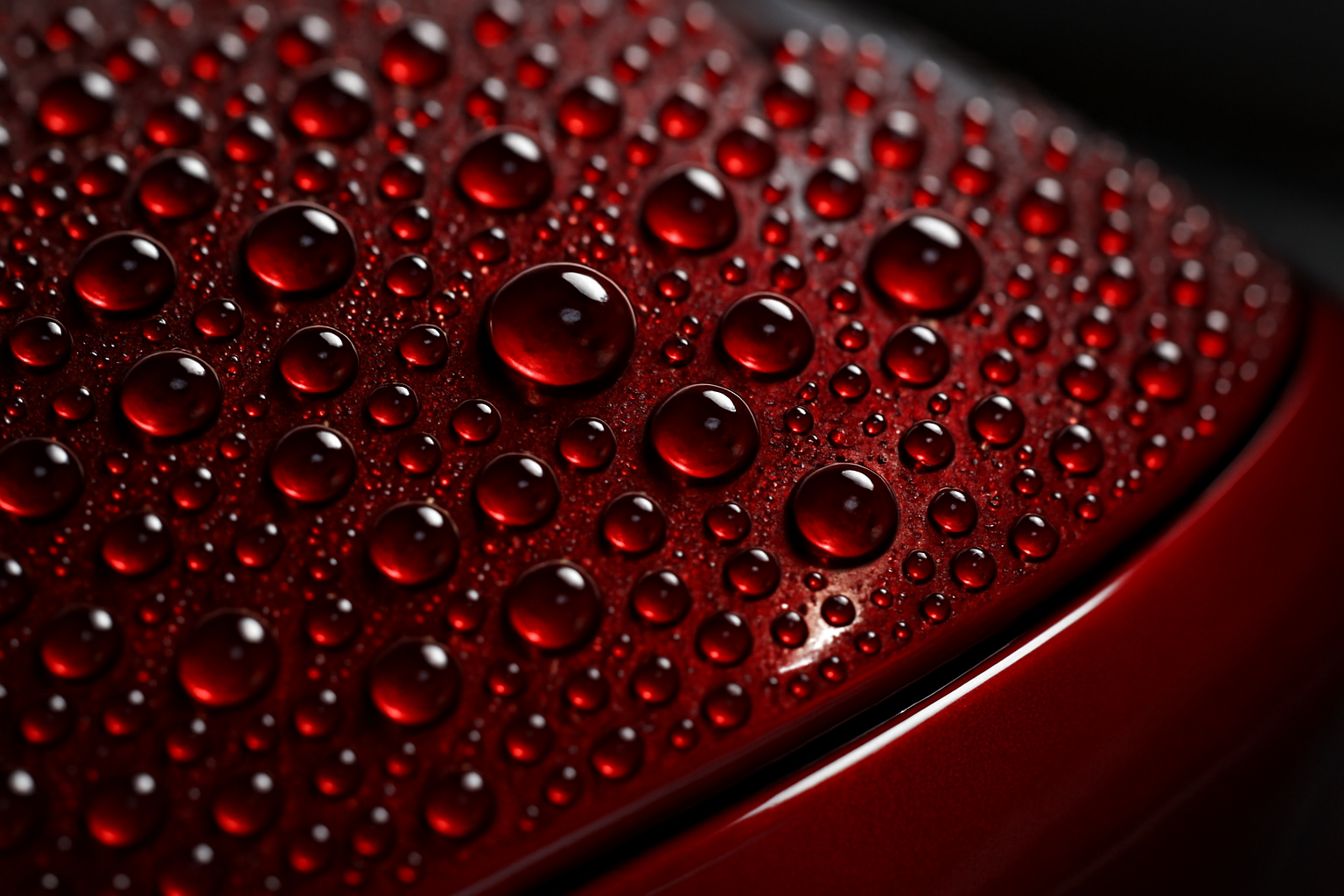
Ceramic coatings are based on Silicon Dioxide (SiO2)—liquid quartz. When cured, they form a crystalline structure that permanently bonds to your clear coat. Unlike wax, SiO2 is inorganic; it doesn't melt, it doesn't wash off, and it is impervious to UV radiation and bird droppings. For 90% of our clients, a Ceramic Coating is the gold standard for "Investment Protection," offering years of high-gloss, hydrophobic performance.

3. Graphene Coatings: The "Flex" Evolution
Graphene is the newest entrant. Essentially, it is a ceramic molecule infused with carbon atoms (Graphene oxide). The primary advantage of Graphene is two-fold: it reduces surface heat absorption (keeping the panel cooler) and offers higher tensile flexibility. This makes it slightly less prone to "water spotting" than traditional ceramics. We often prescribe Graphene for clients with dark-colored vehicles parked outdoors in The Woodlands, where the battle against heat and mineral deposits is constant.

4. The Major Detailz Prescription
So, which one is right for you? If you are garaging a vintage Jaguar that is driven twice a year, a premium Wax offers the best depth. If you are commuting daily on I-10 in a Mercedes S-Class, a Ceramic Coating provides the necessary armor. If you have a black SUV that sits outside, Graphene might be your best defense.

Chemistry, Not Hype
Your paint protection should be matched to your lifestyle, not a sales brochure. Major Detailz brings a "surface science" lab to your driveway in the Energy Corridor or The Woodlands. We analyze your storage habits and driving conditions to apply the chemistry that actually works.
Contact Major Detailz today for a Paint Protection Consultation.


